

Table of Contents
-
Start With The Finished Part, Not The Raw Material
-
Understand Common Aluminum Alloy Families
-
Temper Can Change The Forming Result
-
Choose Wire, Rod, Or Bar For The Process
-
Match Material To The Manufacturing Method
-
Prevent Common Forming Problems
-
Test And Document Before Full Production
-
Consider Total Cost And Supply Risk
-
Material Selection Checklist
-
Common Questions From Engineers And Buyers
-
Better Material Decisions Start Early
Choosing aluminum for a cold-formed part is not simply a matter of selecting the strongest grade or the lowest-priced stock. The right decision connects the finished part’s function, geometry, production method, corrosion exposure, and quality requirements with the behavior of the material before, during, and after forming.
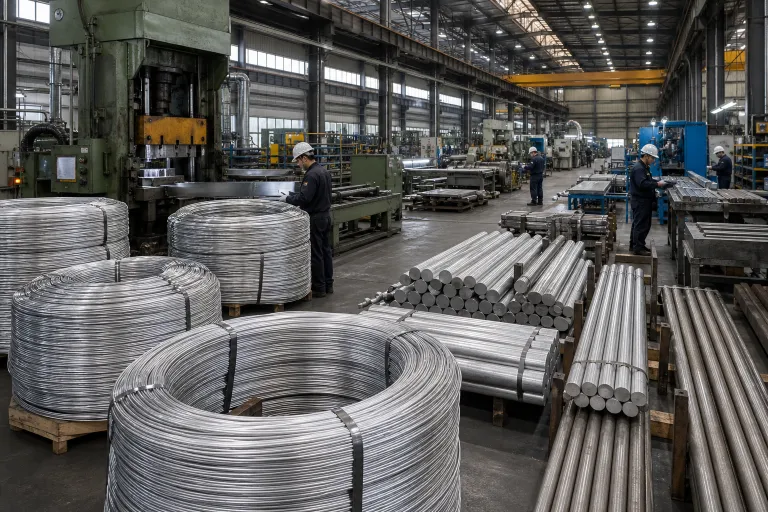
Manufacturers that need support with engineered aluminum bar sourcing can turn to Dr Wire, an aluminum wire, rod, and bar specialist with decades of experience supporting cold-finished material applications. Dr. Wire helps manufacturers across the United States evaluate alloy, temper, dimensions, surface condition, and processing needs for applications such as cold heading, bending, machining, drawing, rolling, and forging.
Start With The Finished Part, Not The Raw Material
Material selection should begin with what the component must do in service. Review the required strength, shape complexity, forming depth, surface finish, corrosion conditions, machining needs, and expected production volume. A low-cost alloy may become the expensive choice if it causes cracking, galling, high scrap rates, excessive tool wear, or secondary processing.
For example, a small cold-headed fastener may require a ductile feedstock and a soft initial temper so material can flow through the die without splitting. A larger component machined from a bar may prioritize dimensional stability, chip control, and surface finish instead. The final part may be aluminum in both cases, but the material strategy is different.
Understand Common Aluminum Alloy Families
Wrought aluminum alloys are commonly grouped by series, with each family offering a different balance of strength, formability, corrosion resistance, and machinability. The aluminum alloy classification system provides useful background, but actual selection should always be based on the specific grade, temper, and process.
-
1xxx series: High-purity aluminum with excellent electrical conductivity and formability, but relatively low strength.
-
2xxx series: Often selected for higher-strength applications. These alloys may require closer attention to corrosion resistance and severe-forming limits.
-
3xxx series: A practical choice where good formability, moderate strength, and corrosion resistance are important.
-
5xxx series: Known for corrosion resistance and useful forming performance, especially where moisture or aggressive environments matter.
-
6xxx series: Offers a widely useful balance of strength, corrosion resistance, machinability, and formability.
-
7xxx series: Provides high strength, but can be less forgiving during demanding cold-forming operations.
Processing history matters as much as alloy family. Recent research on AA2024 aluminum alloy deformation illustrates how grain size, texture, and severe plastic deformation can affect corrosion behavior and material performance. For production parts, this is a reminder that material behavior is influenced by both chemistry and processing.
Temper Can Change The Forming Result
Temper describes the material condition created by thermal treatment or mechanical work. It can significantly affect hardness, ductility, springback, and cracking risk. A stronger condition may be right for the finished part, but not for the first forming operation.
-
Annealed or soft conditions: Usually provide greater ductility and easier material flow.
-
Strain-hardened conditions: Increase strength through cold work, but can reduce forming latitude.
-
Heat-treated conditions: Can provide higher properties after solution treatment and aging.
-
Artificially aged conditions: Often deliver higher final strength, while increasing the chance of springback or cracking during severe forming.
Specify the complete alloy and temper designation rather than simply requesting “aluminum.” A part may be formed in a softer condition, then heat-treated later to reach its final mechanical properties.
Choose Wire, Rod, Or Bar For The Process
-
Wire: Often suits high-volume automated feeding, cold heading, bending, and formed-wire applications.
-
Rod: Can support drawing, forging, extrusion, and processes needing controlled feedstock.
-
Bar: Is commonly used for machining, turning, cold forming, and parts that begin with a larger cross-section.
Product form is more than a purchasing detail. Diameter consistency, straightness, surface quality, coil condition, cut length, and tolerance can affect feed reliability, tool life, and repeatable part dimensions.
Match Material To The Manufacturing Method
Cold Heading And Upsetting
Cold heading depends on ductility, clean surfaces, effective lubrication, and controlled work hardening. Excessive reduction in one hit can create cracks, while poor surface condition can damage dies or initiate defects.
Wire Bending
Consider bend radius, grain direction, springback, and cosmetic surface requirements. Consistent wire diameter and straightness help maintain repeatable bend geometry and reduce setup adjustments.
Cold Forging
Cold forging produces high forming loads, so alloy selection must work with tool design, lubrication, die condition, and reduction per operation. Clean, consistent feedstock is essential.
Machining From Bar
Machinability affects chip control, cycle time, tool wear, and finish. A free-machining grade may improve productivity, but it may not be appropriate if the part also requires substantial cold forming.
Drawing And Rolling
Drawing and rolling increase strength and hardness as reductions accumulate. Multi-stage work may require intermediate annealing to restore ductility and prevent splitting.
Prevent Common Forming Problems
-
Galling: Review lubrication, die finish, contact pressure, and the compatibility of tooling and material.
-
Edge cracking: Check temper, incoming surface defects, bend radius, and reduction per pass.
-
Springback: Evaluate alloy strength, temper, forming angle, and tool compensation.
-
Dimensional variation: Verify diameter, straightness, hardness, and machine alignment.
-
Surface tearing: Inspect feedstock cleanliness, lubrication, die condition, and the reduction schedule.
Test And Document Before Full Production
-
Confirm alloy and temper against the drawing or purchase specification.
-
Request current material certification when traceability is required.
-
Review dimensional tolerance, straightness, length, and surface condition.
-
Run a small forming trial before placing a major production order.
-
Measure hardness and critical dimensions before and after forming.
-
Record defects, then adjust the material condition or process before ramping production.
Consider Total Cost And Supply Risk
Piece price alone does not define material cost. Include scrap, tooling wear, lubricant use, inspection time, rework, freight, and downtime in the comparison. Stable specifications and repeatable supply can be worth more than a small reduction in raw material price.
For long-term programs, qualify more than one acceptable source where practical. Early technical review can prevent a late material change after dies, fixtures, and production processes have already been finalized.
Material Selection Checklist
-
What is the final part shape and service load?
-
Will the part be cold-headed, bent, forged, drawn, rolled, or machined?
-
What corrosion and temperature exposure is expected?
-
Which alloy family meets the required balance of strength and formability?
-
Which temper supports the forming sequence?
-
Will heat treatment be needed after forming?
-
What dimensions, tolerance, straightness, and surface finish are required?
-
What certification and traceability documentation is needed?
Common Questions From Engineers And Buyers
Is A Higher-Strength Aluminum Alloy Always Better?
No. Higher strength can reduce formability and increase springback. The best selection balances final part performance with reliable manufacturing.
Which Aluminum Alloy Is Easiest To Cold Form?
More ductile alloys in softer tempers are generally easier to form. Geometry, tooling, lubrication, reduction, and final property requirements still determine the best option.
Can Aluminum Be Cold Forged?
Yes. Aluminum is used in cold heading, cold extrusion, and cold-forging operations. Successful results require appropriate alloy selection, lubrication, tooling, and process control.
Better Material Decisions Start Early
Alloy, temper, product form, and manufacturing method should be evaluated as one connected decision. The right aluminum feedstock is not necessarily the strongest or least expensive option. It is the material that supports dependable forming, consistent quality, manageable production cost, and the finished part’s real job.