


Key Takeaways
- Early inspections help identify minor pavement issues before they become larger, more expensive failures.
- Cracks, potholes, standing water, and uneven areas can point to different underlying problems.
- Drainage, base support, traffic volume, and weather all affect how long asphalt lasts.
- Crack sealing, patching, resurfacing, and reconstruction each serve different purposes.
- A safe work zone requires planning for vehicles, pedestrians, equipment, weather, and emergency access.
- Regular maintenance makes it easier to budget for pavement work and avoid surprise repairs.
Table of Contents
- Why Asphalt Planning Matters
- What to Check During an Inspection
- Common Types of Asphalt Damage
- Choosing the Right Repair Method
- Drainage and Base Support
- Work-Zone Safety
- Weather and Project Timing
- Building a Maintenance Plan
- Questions to Ask Before Work Begins
- Conclusion
Asphalt work yields better results when it starts with a clear plan rather than a rushed surface fix. Whether the project involves a residential driveway, private road, parking lot, or loading area, property owners should first determine the cause of the damage. For local planning and project discussions, property owners may consider requesting on-site paving estimates Granger, IN, to review visible conditions, access needs, drainage concerns, and the scope of possible repairs. A faded surface or isolated pothole may look like a simple cosmetic issue, but pavement problems often begin below the top layer. Water intrusion, weak soil, repeated heavy loads, poor drainage, and freeze-thaw movement can gradually reduce the support beneath asphalt. Identifying those conditions early helps owners choose a repair that fits the pavement’s actual condition.
Why Asphalt Planning Matters
Planning helps prevent a small defect from becoming a widespread failure. A well-organized approach separates urgent hazards, such as potholes near entrances or broken pavement along walking routes, from defects that can be scheduled for later maintenance. It also gives owners time to coordinate tenant notices, deliveries, parking access, drainage corrections, and project budgets. Planned preservation is often more practical than waiting for every paved area to fail. For example, Macomb County’s 2026 pavement preservation program combines asphalt overlays, concrete patching, and crack sealing across different locations. The larger lesson for private properties is simple: different pavement conditions may need different treatments, even within the same site.
What to Check During an Inspection
A basic daylight inspection creates a useful starting point before requesting proposals. Walk the entire paved area and document what you find. Photos taken from several angles can make it easier to compare changes over time.
- Mark cracks, potholes, soft spots, uneven edges, and areas where water stands after rain.
- Pay close attention to vehicle turning areas, dumpster pads, loading zones, and entrances.
- Check curbs, drains, catch basins, gutters, and downspouts for signs of blocked flow.
- Note where pavement has settled, separated from concrete, or broken along the perimeter.
- Record the inspection date, weather conditions, and the approximate size of each issue.
Common Types of Asphalt Damage
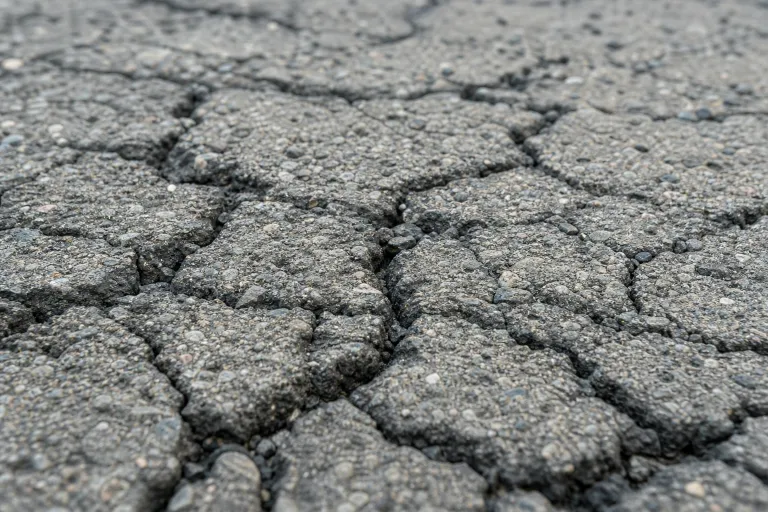
Different damage patterns can suggest different repair needs. Hairline cracks may be early signs of surface aging, while wider cracks can allow water into lower pavement layers. Alligator cracking, which resembles a web of connected cracks, commonly indicates structural weakness under traffic loads. Potholes can develop after moisture enters cracks and traffic breaks apart the weakened surface. Rutting creates long depressions along vehicle paths and may indicate repeated loading or insufficient support below the asphalt. Edge breaks occur where pavement support is lost near its perimeter. Pooling water is also important because standing water can accelerate wear, create slippery conditions, and contribute to underlying damage. A few isolated cracks may need sealing, while widespread cracking across wheel paths may call for a more extensive evaluation.
Choosing the Right Repair Method
Spot Repairs and Crack Sealing
Localized patching and crack sealing can be appropriate when most of the surrounding pavement remains stable. Crack sealing helps reduce water entry through existing cracks. Patches are often used for small potholes, utility cuts, isolated failures, or damaged areas near drains and edges. Proper preparation matters because material placed over a weak or wet area may fail quickly.
Resurfacing
Resurfacing, also called an overlay, places a new asphalt layer over a properly prepared existing surface. It can improve appearance, smoothness, and ride quality when the underlying pavement and base are generally sound. However, an overlay alone will not solve major settlement, persistent drainage issues, or widespread base failure.
Reconstruction
Reconstruction is usually needed when pavement has deep structural problems, severe settlement, repeated failure, or extensive alligator cracking. This process can include removing damaged asphalt, addressing drainage or subgrade concerns, rebuilding the aggregate base, and installing new pavement layers. It involves a larger initial investment, but it may provide better long-term value than repeated temporary repairs.
Why Drainage and Base Support Matter
Water is one of asphalt’s most persistent threats. If runoff collects beneath, beside, or on top of the pavement, it can weaken the base and subgrade. Owners should confirm that the surface slopes toward functional drainage points, catch basins are clear, downspouts do not discharge onto pavement, and water is not collecting at edges or entrances. A smooth new surface can still fail early if the drainage or support problem below it remains unresolved. Before approving work, ask whether the scope includes correcting soft areas, restoring proper slope, repairing failed edges, or improving runoff flow away from the pavement.
How to Build a Safer Work Zone
Safety planning should begin before trucks and equipment arrive. A paving project may affect customers, residents, delivery drivers, employees, pedestrians, and emergency responders. Clear boundaries, visible signs, cones, barriers, and designated walking routes help reduce confusion around an active work area. Construction safety also involves worker visibility, equipment movement, heat exposure, trip hazards, and changing site conditions. OSHA emphasizes planning, training, and hazard awareness as core components of construction safety. On a paving project, that means reviewing traffic control, staging areas, fire lanes, pedestrian detours, and daily weather risks before work starts.
Picking the Right Time for Asphalt Work
Temperature, rain, surface moisture, and seasonal conditions can affect asphalt placement and compaction. A realistic schedule should include preparation time, installation, compaction, cooling, curing, and safe reopening. Rushing before rain or placing material on a poorly prepared surface can affect bonding and performance. Property owners should also consider how work will affect normal operations. A parking lot may need to be completed in phases, while a driveway project may require alternate parking or temporary access arrangements. Discuss closures, delivery schedules, and reopening expectations before the project date is set.
Creating a Simple Maintenance Plan
Maintenance is most effective when it is scheduled rather than handled only after a failure. A simple plan can include the following tasks:
- Monthly: Remove debris near drains and edges, and look for new cracks, potholes, or ponding water.
- Seasonally: Inspect after freeze-thaw periods, clear leaves before heavy rain, and review pavement markings and walking routes.
- Annually: Complete a full condition review, compare current photos with prior records, rank repairs by urgency, and budget for preservation work.
Questions to Ask Before Work Begins
- What pavement problem is the proposed treatment intended to solve?
- Will the work address drainage, base, or soft-spot concerns?
- What preparation is included before new material is placed?
- How will vehicle traffic, pedestrians, and emergency access be managed?
- What weather conditions could delay the project?
- How long will the area need to remain closed or restricted?
- Does the proposal clearly list materials, thickness, limits, and exclusions?
Final Thoughts
Durable asphalt work begins with an accurate diagnosis and continues with sound preparation, effective drainage, safe execution, and regular maintenance. By tracking pavement conditions and responding early to visible defects such as cracks, potholes, edge deterioration, or standing water, property owners can make more informed repair decisions before damage spreads. Addressing underlying causes rather than only surface symptoms helps extend pavement life and improve long-term performance. Routine inspections, timely maintenance, and proper drainage management can also reduce unexpected repair costs, minimize disruptions, and preserve the appearance of driveways, parking lots, and roadways. A proactive approach supports safer, more reliable paved surfaces for drivers, pedestrians, and property visitors year-round.