

Key Takeaways
-
BIM improves collaboration and reduces miscommunication among project teams.
-
Early visualization and clash detection minimize design errors and costly rework.
-
Accurate cost estimation and efficient resource use control budgets.
-
Supports sustainability and energy-efficient design.
-
Enhances facility management with comprehensive digital records.
-
Speeds up projects and increases overall ROI.
Introduction
Building Information Modeling (BIM) is transforming the construction sector by introducing a digital approach to the design, construction, and management of facilities. From enhanced collaboration to cost efficiency, BIM addresses common project challenges while improving project outcomes. In regions such as Florida, leveraging BIM services Florida is increasingly essential for firms that want to boost productivity and streamline complex building processes. Let’s examine the significant advantages your building projects gain through the adoption of BIM tools and methodologies.
This shift toward digital modeling fosters smarter, faster, and more sustainable construction projects. As sustainable practices and efficient delivery methods become increasingly critical in a competitive market, project stakeholders are seeking ways to innovate and reduce risk at every project stage. BIM directly supports these goals, offering benefits that extend across the full project lifecycle and impact everything from the earliest concept to eventual facility management. Engaging with BIM services is not just a trend but a smart investment for long-term project success.
Enhanced Collaboration and Coordination
BIM’s centralized platform is designed to break down traditional silos between architects, engineers, contractors, and owners. Each project participant interacts with a shared 3D model that acts as the project’s single source of truth. This approach mitigates errors from disconnected workflows and significantly reduces miscommunication. Coordinating schedules, design changes, and responsibilities within one environment leads to a smoother construction process and fewer surprises in the field.
Project-wide visibility ensures alignment on goals and empowers stakeholders to make timely decisions. Enhanced collaboration is especially valuable in projects with complex requirements or aggressive timelines, where mistakes and misunderstandings can quickly escalate costs and cause delays.
Improved Visualization and Planning
Instead of relying solely on 2D drawings, BIM brings projects to life with highly detailed 3D and even 4D (time-based) models. These digital representations enable better visualization, helping teams anticipate challenges before they materialize. Construction phasing, spatial analysis, and site logistics can be reviewed in a simulated environment. This proactive planning identifies design inconsistencies early, reducing the risk of costly field rework or delays due to unforeseen complications.
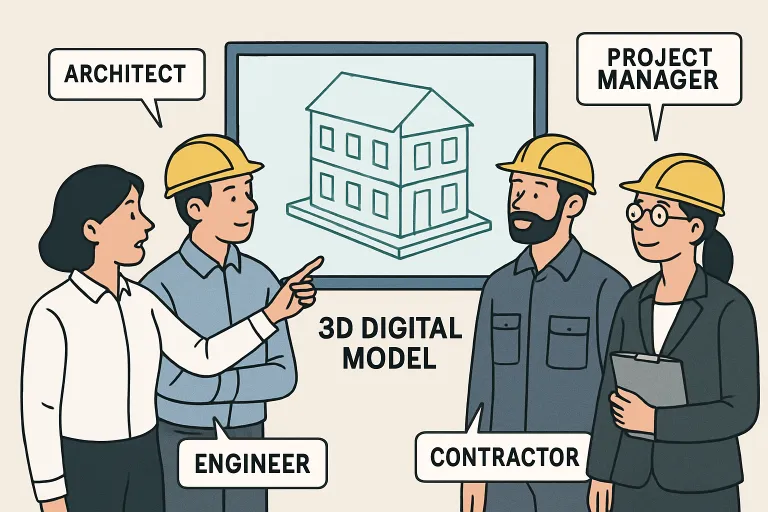
As projects grow in size and complexity, the capacity to see the finished structure in advance is crucial. Enhanced visual insights enable all project members, including non-technical clients, to understand designs and provide feedback well before breaking ground.
Accurate Cost Estimation and Budget Management
Accurate budgeting is a foundation of successful project delivery. BIM integrates with cost databases, enabling estimates to be generated directly from the evolving digital model. Material quantities, labor costs, and equipment expenses update in real time as designs change, minimizing budget surprises and enabling tighter cost control. The advanced level of detail in a BIM model supports precise takeoffs and schedule alignment, contributing to a more predictable financial outcome.
Resource allocation can also be optimized, reducing material waste and aligning project investments more closely with long-term goals. These features make BIM an invaluable tool for owners, project managers, and contractors who must demonstrate cost accountability to stakeholders.
Clash Detection and Risk Mitigation
BIM’s automated clash detection runs through interconnected systems, mechanical, electrical, plumbing, and structural elements, revealing conflicts before they reach the job site. By highlighting issues such as pipe-electrical overlaps or structural interferences, the model enables teams to resolve clashes virtually rather than through time-consuming, costly on-site corrections.
The proactive approach to risk mitigation extends beyond design accuracy. It also enables scenario analysis, where teams can evaluate the outcomes of different design or sequencing options and select the least risky path. According to Autodesk, this capability is a significant factor in why companies see reduced change orders and faster overall project delivery.
Enhanced Sustainability and Energy Efficiency
BIM models capture rich data on materials, energy consumption, and life cycle performance. This data empowers design teams to run simulations and optimize the building’s environmental footprint from the earliest stages. Engineers can explore scenarios to improve insulation, daylighting, and renewable energy integration, enabling the design of structures that meet today’s demanding green standards.
The result is lower operational costs, reduced emissions, and a facility that’s more appealing to eco-conscious clients. BIM also supports tracking of LEED certification progress and contributes to transparent documentation of sustainable practices.
Better Facility Management and Lifecycle Tracking
After construction, BIM continues delivering value by informing maintenance, renovations, and space management. Owners and facility managers receive a comprehensive digital record of the building, including specifications, asset data, and maintenance histories. Scheduled maintenance, replacement planning, and upgrades can be managed more efficiently, extending the building’s operational lifespan and supporting cost-effective asset management.
This digital twin effect bridges design, construction, and operations, reducing knowledge loss as building ownership and management roles transition over time.
Shorter Project Lifecycles and Greater ROI
BIM’s efficiencies speed up design and construction phases by reducing rework, mitigating risks, and allowing iterative yet controlled changes. Shorter project timelines benefit owners by delivering new facilities or renovations faster, giving a head start on revenue generation. At the same time, streamlined processes control costs, creating a more favorable return on investment for all participants involved in the project.
Final Thoughts
Building Information Modeling delivers measurable improvements in collaboration, design visualization, budgeting, sustainability, and long-term facility management. For businesses and public entities committed to efficient and future-resilient construction, adopting BIM is no longer optional but a strategic necessity that maximizes project value. Leveraging BIM not only transforms how projects are executed but establishes a blueprint for smarter, greener, and more cost-effective construction in the years to come.